

3 Secrets of the Maillard Reaction: The Amazing Science of Flavor
Have you ever wondered why a golden-brown roasted chicken thigh is so much more appetizing than a poached one? Or why we instinctively crave those visible, crispy bites? The answer lies in a brilliant chemical process known in gastronomy as the Maillard Reaction. This culinary miracle is built on scientific foundations that transform simple ingredients into masterpieces.
What Happens in the Pan? Understanding the Maillard Reaction
At its core, the reaction occurs when amino acids from proteins and natural sugars interact under heat. When the surface of your food reaches the 140–165°C range, these components begin to transform. This specific Maillard Reaction is responsible for that complex, deep, and roasted flavor profile that no other cooking method can replicate. It is important to realize that the brown layer on your meat or roasted potatoes isn’t just a color, it is the flavor concentrate itself.
Where Do We Encounter It?
The Maillard Reaction is present in almost every area of gastronomy. It creates the irresistible crust on a steak, the heavenly aroma of toasted bread, and even the deep notes released during coffee roasting. Even the characteristic profile of chocolate is partially due to this process. This is why professional chefs are obsessed with searing meat properly before finishing it over lower heat to ensure the reaction is fully developed.
Pro Tips to Master the Maillard Reaction at Home
To maximize this effect in your “Kitchen Lab,” you must recognize its greatest enemy: moisture.
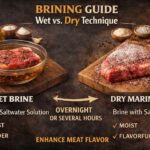
- The Dryness Rule: If the surface of the meat is wet, the thermal energy is wasted on evaporating water first, and the browning eludes you. Always pat your meat bone-dry with paper towels before it hits the hot pan to trigger the Maillard Reaction immediately.
- Avoid Overcrowding: Do not crowd the cooking surface. Adding too much meat at once drops the temperature significantly, causing the Maillard Reaction to stall and your meat to steam instead of sear.
Understanding the Maillard Reaction is the difference between a simple dinner and an unforgettable gastronomic experience. Next time you smell that searing meat, you’ll know that chemistry is working for you, not against you.
Join The Munching Theory Crew!
Did you survive the kitchen “balhé” without burning the house down? We want to see your results! Whether it’s a perfectly bubbled pizza crust or a massive batch of pickled peppers, sharing the passion for real food is what we do at The Munching Theory.
Craving more kitchen wisdom? Don’t miss out on all our pro tips! If you want to master more secret techniques and hacks, head over to The Kitchen Lab to find all our guides and “okosságok.” We’ll make sure you never have a dull meal again.
- Show us your plates on Instagram: Tag @themunchingtheory in your stories and posts. We love resharings of your best (and even your messiest) kitchen moments!
- Catch the vibe on Facebook: Follow our page for daily inspiration, behind-the-scenes “gastro-hustle,” and to connect with others who believe that we shall not go hungry today!
- Watch the action on YouTube: If you prefer to see the techniques in motion, check out our latest video guides.
Don’t just eat, Make it a The Munching Theory experience. See you in the next one!